The Complete Guide to Shark Gaming & Vector Character Assets: Your Gateway to Creative Design
In the vibrant world of digital design, finding the right graphical elements can be the difference between a bland project and a standout masterpiece. For creators focusing on themes like gaming, action, technology, or futuristic concepts, character assets are invaluable. A popular and sought-after collection revolves around "Shark Gaming and Vector Characters." This feature isn't just a set of images; it's a comprehensive, editable toolkit designed to empower designers of all skill levels. Understanding the formats involved—AI, EPS, PDF, JPG, and PSD—and the promise of being "100 Editable" with easy color changes is crucial for harnessing its full potential.
What Are Shark Gaming & Vector Character Features?
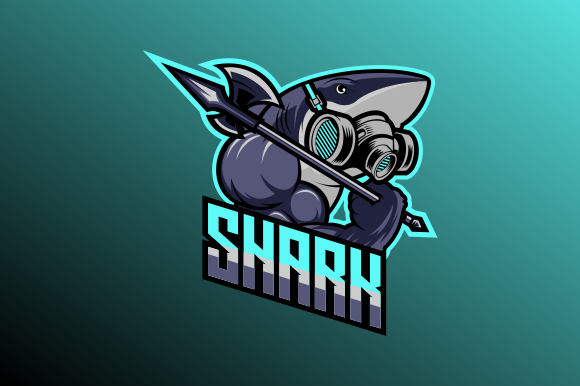
At its core, this feature refers to a curated bundle of digital illustrations, typically depicting characters themed around sharks, gaming, cyberpunk, or athletic futurism. These aren't static pictures you simply paste into a layout. They are vector-based graphic files, which means they are built using mathematical paths and points rather than fixed pixels. This fundamental characteristic is what makes them so powerful and flexible.
The "feature" includes these characters in multiple professional file formats, each serving a distinct purpose in the design workflow. Being "100 Editable" signifies that every element within the files—from the shark's fin to a character's helmet texture—can be modified, separated, or reshaped. This level of control is what transforms a purchased asset into a unique, custom creation for your specific project.
The Significance of Different File Formats: AI, EPS, PDF, JPG, PSD
Each format included in such a bundle is a key that opens a different door in the design process. Knowing their roles helps you choose the right tool for the task.
- AI (Adobe Illustrator): This is the native source file. It contains all the original vector paths, layers, and editable properties. Working in AI gives you the utmost control for complex editing, reshaping characters, or creating entirely new compositions from the pieces.
- EPS (Encapsulated PostScript): A universal vector format that can be imported into many design programs, including older software or non-Adobe applications. It's excellent for sharing vector graphics while preserving editability across platforms.
- PDF (Portable Document Format): While known for documents, PDFs can contain high-quality vector graphics. They are perfect for sending proofs to clients or for uses where the file needs to be viewed and printed reliably without specialized software.
- JPG (JPEG): This is a raster, or pixel-based, image format. It provides a ready-to-use, high-resolution final image for immediate placement in websites, social media, or presentations where no further editing is needed. It's the "final product" version.
- PSD (Adobe Photoshop): This file is layered but primarily raster-based. It's incredibly useful for integrating the vector characters into photorealistic scenes, applying complex texture effects, blending with photographic elements, or doing detailed color adjustments using Photoshop's powerful tools.
Having all these formats means you are covered from the initial design stage (AI/EPS) to final compositing (PSD) and delivery (PDF/JPG). It bridges the gap between vector illustration and raster image editing seamlessly.
The Practical Relevance: Why "100 Editable" and Easy Color Changes Matter
The promise of complete editability is not a minor feature; it's the central value proposition. In modern design, from branding to content creation, uniqueness is paramount. Using a stock image as-is can make your work look generic. This toolkit solves that.
Fitting into Modern Creative Workflows
Whether you are a freelance graphic designer, a marketing agency working on a gaming campaign, a small business creating merch for an esports team, or an educator building engaging learning materials about technology, these assets integrate perfectly.
- For Business & Marketing: You can adapt the shark gaming character to match your brand colors exactly. Change its armor from blue to your signature orange, modify the background elements to reflect your product, and create a series of cohesive visuals for ads, newsletters, and website banners.
- For Education & Communication: Teachers or content creators can use these characters to make topics like marine biology, computer science, or sports more visually appealing. The ability to edit allows you to simplify a complex character for a younger audience or add specific labels for instructional purposes.
- For Personal Projects & Creativity: Hobbyists creating fan art, YouTube channel art, or custom gaming setups can personalize every detail. This democratizes high-quality design, allowing those without advanced drawing skills to produce professional-level artwork.
The "Easy to Change Colors" Feature in Practice
Color is often the first and most impactful change a designer makes. In vector files (AI/EPS), colors are typically defined as swatches or fills on isolated paths. This means you can use Adobe Illustrator's global swatches or the direct selection tool to change a color across the entire design with a few clicks. In Photoshop (PSD), you might use adjustment layers, hue/saturation sliders, or layer styles to achieve the same effect, albeit with more raster-based flexibility for adding gradients and textures.
This ease empowers rapid iteration. You can create a dark-mode version, a holiday-themed variant with red and green, or a monochrome logo extract from the same base file without starting from scratch.
Clarifying Common Misunderstandings
Several assumptions can hinder someone from fully utilizing such a feature. Let's address them clearly.
- "It's just a picture pack." This is the biggest misconception. Unlike a simple JPG download, this is a design system. You receive the building blocks, not just the finished wall.
- "I need to be a pro to use AI/PSD files." While advanced skills unlock deeper potential, beginners can achieve significant results. Changing colors in Illustrator with the swatch panel or moving layers in Photoshop is approachable. The provided JPG also serves as a fallback for immediate use.
- "Vector files only work for logos." Not true. These vector characters can be scaled to any size for any medium—a tiny app icon, a massive billboard print, or an animated character in a video (by importing vector layers into animation software). Their scalability is a universal benefit.
- "All the formats are the same; I just need one." Each format is optimized for a different phase of your project. Using the JPG for a web graphic is fine, but if the client asks for a color change tomorrow, you'll need the AI or PSD file. Having the bundle ensures future flexibility.
Building a Broader Understanding: The Role in Today's Digital Ecosystem
Graphic assets like these are more than just convenience products; they reflect how digital creation has evolved. They support the rapid prototyping needs of the online world, where visual content must be produced quickly and iterated upon constantly based on feedback or trending styles.
They also embody the principle of creative empowerment. High-end design is no longer gated solely by the ability to draw from a blank canvas. It's now also about the skill to customize, remix, and integrate powerful existing elements—a form of digital craftsmanship that is highly valued in fields like UI/UX design, social media management, and entrepreneurial branding.
Examples of Natural Application
Imagine a few scenarios:
- A tech startup launching a new gaming headset uses the shark character as a mascot. They edit the file in AI to incorporate their logo into the character's visor, change the color scheme to match their product, and use the PSD to create a realistic advertisement showing the character wearing their actual headset.
- A school club organizing an esports tournament uses the assets to create their event posters. They easily change the background colors for different age division posters (yellow for junior, blue for senior) using the simple color edit features, all while maintaining a consistent, professional look.
- A digital artist uses the vector paths in Illustrator as a base to practice advanced shading techniques, treating the editable file as a training skeleton to learn new digital painting skills without worrying about the initial line art.
Conclusion: Your Toolkit for Dynamic Visual Creation
A feature comprising Shark Gaming & Vector Characters in AI, EPS, PDF, JPG, and PSD formats, with 100% editability, is a robust investment in your creative capabilities. It bridges the worlds of illustration and photo-editing, caters to both beginners and experts, and provides the agility needed to keep visual content fresh and branded in today's fast-paced digital environments. By understanding the distinct purpose of each file type and embracing the power of easy editing, you transform a collection of graphics into an endless source of customized, high-impact visual communication. Whether for work, education, or personal passion, this toolkit places the power of professional design directly in your hands.