The Strategic Edge: Optimizing Your Esports Brand with Vector Graphics
In the high-velocity arena of competitive gaming, branding is not merely a backdrop; it is a critical component of team identity, fan engagement, and commercial viability. For organizations like Ninja Gaming, establishing a visual language that is both distinctive and adaptable across countless platforms is a core strategic challenge. The solution lies in a fundamental tool of digital design: vector graphics. Understanding their characteristics, advantages, and practical application is essential for anyone involved in the esports ecosystem, from team managers and content creators to business owners and dedicated fans.
Why Vector Graphics Dominate Esports Visuals
The esports industry operates at a digital-native pace. Logos, mascots, overlay elements, merchandise designs, and social media assets need to appear on everything from a massive Twitch stream overlay to a tiny smartphone app icon, a printed jersey, and a sponsored billboard. Pixel-based images, like JPEGs or PNGs, struggle with this multi-scale demand. They have fixed resolutions; enlarging them often results in blurry, pixelated edges, while shrinking them can lose detail.
Vector graphics, defined by mathematical equations describing points, lines, curves, and shapes, solve this problem perfectly. A vector logo for Ninja Gaming can be scaled to any size—from a website footer to a full-wall mural—without any loss of clarity or sharpness. This inherent scalability provides an unparalleled flexibility that aligns perfectly with the multi-platform reality of a modern esports brand.
Core Characteristics of Vector Assets
To appreciate their strategic value, it’s important to grasp what sets vector files apart. Unlike a photograph of a logo, a true vector graphic is built from editable paths. These paths are anchored by points that can be manipulated with precision. This means the color, shape, stroke width, and every other attribute of the design is not locked into static pixels but exists as adjustable data.
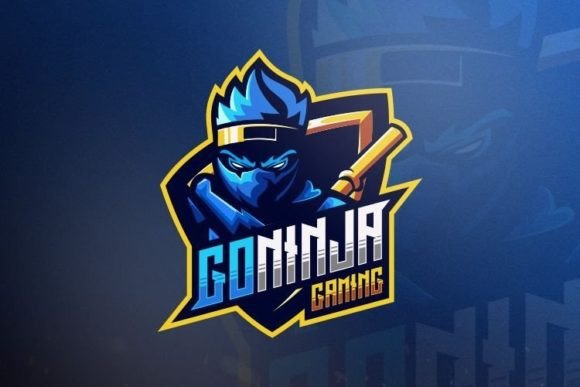
Consider a common esports asset: a team emblem featuring a stylized ninja, like the one potentially used by Ninja Gaming. In a vector format, the silhouette of the ninja, the sharp angles of a thrown shuriken, or the curves of a katana are all defined by editable points and Bezier curves. This editability is the gateway to consistency and variation. A primary logo can be swiftly adapted for a dark-mode website version, a simplified social media avatar, or a special anniversary variant without redrawing from scratch.
The Practical Advantage: Editing in Adobe Illustrator
The requirement that "All elements in this template can be edited in Adobe Illustrator" speaks directly to the workflow advantage. Adobe Illustrator is the industry-standard software for creating and manipulating vector graphics. Its toolset allows designers—or even knowledgeable team staff—to make precise adjustments. Perhaps Ninja Gaming wants to temporarily incorporate a championship trophy into their logo for a post-win marketing campaign. With the original vector files, a designer can seamlessly integrate new elements, change color schemes to match a new game title partnership, or extract specific components for use in animated graphics.
This control extends beyond major overhauls to minute refinements. Adjusting the thickness of a line to improve readability on a busy stream overlay, tweaking a color hue to better match sponsor branding, or isolating the text element from the icon for separate use—all are straightforward tasks with the original Illustrator file. This empowers brands to maintain visual coherence while responding dynamically to the fast-paced demands of the esports calendar.
Real-World Use Cases in the Esports Ecosystem
The application of editable vector graphics permeates every layer of an esports organization's presence.
- Broadcast & Digital Content: On-stream graphics, including scoreboards, player stat panels, and interstitial banners, are derived from vector assets. Their sharpness ensures clarity at all broadcast resolutions. Animators use vectors as the foundation for motion graphics, as they can be cleanly manipulated and sequenced.
- Merchandise & Physical Goods: When producing apparel, accessories, or hardware collaborations, manufacturers require high-resolution, scalable artwork. A vector logo ensures the Ninja Gaming emblem is perfectly crisp on a hat embroidery, a mousepad print, or a limited-edition jacket.
- Marketing & Sponsorship Collateral: Collaborative campaigns with game publishers or hardware brands often require logo integrations. Providing partners with editable vector files allows for professional, cohesive co-branding across advertisements, press releases, and event signage.
- Community & Social Engagement: Fans and community creators often produce their own content. By releasing official, simplified vector assets (like isolated icons or text), teams like Ninja Gaming can empower their community to create high-quality fan art, montages, and support banners, strengthening brand loyalty and reach.
Key Considerations for Implementation
While the advantages are compelling, effectively leveraging vector graphics requires thoughtful planning. First, there is a matter of accessibility. The core, editable .AI or .EPS files should be managed as critical brand assets, typically handled by a core design team or agency. However, for wider use, derivative files in universal vector formats like .SVG (Scalable Vector Graphics) can be shared. SVG files are web-friendly, often editable in simpler software, and maintain scalability.
Second, design complexity must be balanced with editability. A highly intricate, photorealistic vector illustration may be less practical for quick adaptations than a more iconic, simplified logo. The initial design phase for a brand like Ninja Gaming should consider how the logo will be deconstructed and used across applications. Creating a system—with separate, layered elements for the primary icon, secondary motifs, and text—can streamline future workflow.
Finally, version control is crucial. As logos evolve or are temporarily modified for events, maintaining an organized library of vector files prevents confusion and ensures all stakeholders are using the correct, current assets. This is a fundamental aspect of professional brand management in esports.
Beyond the Logo: A System of Visual Elements
The strategic use of vectors extends far beyond the main team logo. A comprehensive brand identity includes patterns, typography, icon sets for different game titles, and graphical motifs for use in backgrounds or texturing. Each of these can be developed as vector assets. For instance, Ninja Gaming might have a vector-based pattern of subtle shuriken shapes for use on website backgrounds, or a set of vector icons representing their teams in League of Legends, Valorant, and Counter-Strike. This creates a full, adaptable visual system that reinforces brand recognition at every touchpoint.
The Broader Impact on Esports Branding
The adoption of vector graphics as a foundational standard reflects the maturation of the esports industry. It moves visual identity from a static logo image to a dynamic, data-driven asset. This shift supports scalability, not just in size, but in operational scope. As Ninja Gaming grows, enters new markets, or develops subsidiary teams, its core visual assets can adapt without costly rebranding or quality degradation.
For professionals and business owners in the space, investing in high-quality, professionally created vector graphics is an investment in long-term brand equity. For content creators and educators, understanding how to utilize these assets unlocks higher-quality production. For researchers and hobbyists, it demystifies the technical backbone of the polished visual presentation they see in top-tier esports. Ultimately, the editable vector graphic is more than a file format; it is a tool for ensuring that a brand's visual identity remains as agile, precise, and competitive as the players it represents.
In a landscape where perception and professionalism are vital, the clarity of a logo on a championship banner, the sharpness of an emblem on a player's jersey, and the consistency of branding across a global streaming platform all contribute to an organization's authority and appeal. By mastering the creation and application of editable vector graphics, esports entities like Ninja Gaming secure a vital strategic edge, ensuring their visual identity is always ready for the next challenge, on any screen, at any scale.